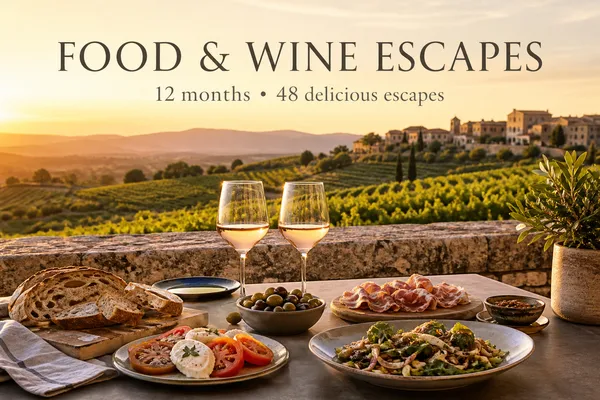
Where to Go for Food & Wine: 48 Delicious Escapes for Every Month
12 months • 48 delicious escapes
For some travellers, the most memorable part of a holiday is not the view from the room but the first taste of something that could only belong to that place. This month-by-month guide follows the seasons from winter city tables to autumn vineyards, pairing 48 destinations with the flavours, markets and landscapes that make them worth travelling for.
There is no single perfect destination for everyone. Weather patterns vary, opening dates change and the same month can feel very different at its beginning and end. Treat this as inspiration, then refine the choice around your preferred temperature, journey, budget and pace.
If your dates are flexible, compare these ideas with our Where to Go, When guide and our collection of sun, beach and cocktails holidays.

January: Seville, Lisbon, Palermo or Valletta
A well-chosen January escape replaces post-Christmas grey with a genuine change of scene. Southern European cities are calmer than they are in spring and summer, which leaves more space for market browsing, long lunches and spontaneous discoveries. Balance one special restaurant reservation with neighbourhood cafés and whatever looks best that day.
Seville
Choose Seville for orange-scented lanes, tiled courtyards and late tapas. Winter temperatures are usually much more comfortable for walking between neighbourhoods than they are in high summer. Begin with familiar Andalusian favourites, then look for seasonal stews, local cheeses and dishes built around Iberian pork. Do not eat only beside the main monuments. Some of the most enjoyable evenings begin at a simple neighbourhood bar where the menu changes according to what arrived that morning.
Lisbon
Lisbon combines hilltop viewpoints, tiled streets and a strong Atlantic food tradition. Fresh fish, shellfish, small plates and excellent pastries make it easy to build a day around food without booking every meal. Explore traditional markets, but also leave time for the city’s modern restaurants and independent wine bars. Portugal’s regional wines offer far more variety than many visitors expect, so a guided tasting can provide a useful introduction before travelling farther into the country.
Palermo
Palermo’s food reflects the many cultures that have shaped Sicily. Busy markets, Arab-influenced flavours, seafood and boldly seasoned street food sit beside elegant restaurants and historic pastry shops. Try panelle, arancine and freshly filled cannoli, but make room for slower meals too. January gives you a chance to explore the city’s layers without the intensity of summer heat. The combination of food, architecture and energetic street life makes Palermo much more than a weekend dining destination.
Valletta
Compact Valletta works beautifully for a short winter break. Its honey-coloured streets lead to harbour views, intimate wine bars and restaurants that draw on Maltese, Italian, North African and British influences. Look for dishes using rabbit, local fish, capers and traditional breads. Because the centre is so walkable, you can combine a museum or historic site with a long lunch and an evening drink without spending much of the day in transit.

February: Bologna, Porto, Nice or Valencia
February suits a restorative city break built around comfort, atmosphere and good meals. Travelling outside the busiest school-holiday dates can produce a quieter rhythm, while cool evenings give you every excuse to linger over dinner.
Bologna
Bologna is one of Italy’s essential food cities. Its porticoes make winter walking easier, while the Quadrilatero market district provides an immediate introduction to cured meats, cheeses, handmade pasta and traditional balsamic vinegar. Look beyond generic spaghetti bolognese and try tagliatelle al ragù, tortellini in brodo and mortadella from a specialist deli. A pasta-making class can be worthwhile here because it connects practical technique with the city’s family traditions.
Porto
Porto offers riverside quarters, blue-tiled façades and rich northern Portuguese cooking. Cold-weather dishes such as tripas à moda do Porto and the famously substantial francesinha suit a February visit, although there is also a growing collection of lighter contemporary restaurants. Cross the Douro to Vila Nova de Gaia for a port tasting, or arrange a day in the Douro Valley if vineyard landscapes are central to your trip.
Nice
Nice brings Belle Époque streets, colourful markets and the bright flavours of the Côte d’Azur. Browse the Cours Saleya market, try socca fresh from the oven and look for traditional dishes such as petits farcis and daube niçoise. February is also associated with the Nice Carnival, although exact dates and events should be checked before booking. Stay within easy reach of the old town if you want to make evening dining simple.
Valencia
Valencia combines an attractive historic centre, striking modern architecture and one of Spain’s most recognisable regional dishes. Authentic Valencian paella is traditionally made with rabbit, chicken and local beans, rather than the mixed seafood versions served in many tourist areas. For the best experience, plan paella as a leisurely lunch and consider travelling to one of the restaurants near the rice fields of Albufera.
March: Marrakech, Split, Athens or Palermo
March is a useful bridge between seasons. Spring begins around the Mediterranean, terraces gradually return to life and the days become easier for exploring on foot. Pack a light layer for evenings and leave a little flexibility in case the weather changes.
Marrakech
Marrakech is a feast of garden courtyards, spice-filled souks and lantern-lit riads. Food experiences can range from simple market snacks to elaborate dinners in restored palaces. Look for fragrant tagines, vegetable salads, couscous and pastilla, then explore modern Moroccan cooking at one of the city’s newer restaurants. A guided market visit or cookery class can help you understand the ingredients without reducing the experience to a shopping checklist.
Split
Split’s old town is woven through the remains of Diocletian’s Palace, creating an atmospheric setting for relaxed eating. Dalmatian food highlights grilled fish, octopus salad, black risotto, local olive oil and slow-cooked meat dishes. March is quieter than summer, so check seasonal opening times before planning specific restaurants. It is a good month for travellers who value local atmosphere more than guaranteed swimming weather.
Athens
Athens pairs ancient landmarks with lively modern neighbourhoods and a varied food scene. Traditional tavernas, bakeries and market stalls sit beside inventive restaurants working with Greek produce. Explore the central market, try regional cheeses and make time for meze rather than treating every meal as a formal occasion. Spring temperatures also make it easier to combine food with the Acropolis, museums and long neighbourhood walks.
Palermo
Palermo is worth repeating in March because the city’s markets and historic streets remain comfortable to explore before summer arrives. Its street food is celebrated, but the deeper pleasure comes from understanding how Arab, Norman, Spanish and Italian influences meet on the plate. Pair market tasting with a proper Sicilian dinner and a visit to one of the city’s traditional pastry shops.
April: Istria, Puglia, Provence or San Sebastián
April brings longer days, green landscapes and a sense that Europe’s seasonal destinations are waking up. Easter can increase demand, so secure characterful rooms, tastings and sought-after restaurants in advance.
Istria
Istria combines hill towns, olive groves, vineyards and an Adriatic coastline. The region is known for truffles, excellent olive oil, seafood and wines such as Malvazija Istarska and Teran. Base yourself near Rovinj for coastal atmosphere or farther inland for easier access to producers and small villages. A private driver is valuable if you want to visit wineries without worrying about the journey back.
Puglia
Puglia’s food is rooted in good ingredients and recipes that rarely need embellishment. Expect handmade orecchiette, burrata, focaccia, seasonal vegetables and olive oil produced across the region. Staying in a traditional masseria can bring you closer to that agricultural landscape. April is particularly attractive for visiting whitewashed towns and countryside before the heat and crowds of midsummer.
Provence
Village markets, vineyards, cheeses, olives and herb-scented landscapes make Provence an obvious choice for travellers who like to eat close to the source. April is quieter than lavender season, but that can be an advantage if you are more interested in markets and villages than famous photographs. Choose a base carefully because driving distances can be deceptive on smaller rural roads.
San Sebastián
San Sebastián offers one of Europe’s most concentrated food experiences. The city is famous for Michelin-starred restaurants, but its pintxos bars are equally important. Spend an evening moving between several bars and ordering one or two specialities in each. A guided introduction can help on your first night, although independent exploration is part of the fun once you understand the rhythm.
May: Tuscany, Hvar, Seville or Sicily
May is one of Europe’s loveliest travel months. Days are warm without the intensity of midsummer, terraces are lively and landscapes remain green. It is ideal for pairing food and wine with gentle exploration.
Tuscany
Tuscany offers vineyard landscapes, Renaissance towns and the promise of a long lunch beneath the trees. Visit a respected wine estate, but do not overlook village trattorias and local markets. The region’s cooking is often rustic and direct, with bread, beans, grilled meat, pecorino and seasonal vegetables at its heart. Consider dividing your stay between countryside and city if Florence is also a priority.
Hvar
Hvar’s lavender landscapes, coves and polished harbour make it an attractive early-summer escape. Local food centres on fish, seafood, olive oil and ingredients grown in the island’s interior. A boat day can include a relaxed lunch in a smaller bay, while a drive away from Hvar Town reveals vineyards and villages that many short-stay visitors miss. Maslina Resort is worth exploring if you prefer an understated Adriatic base with a strong sense of place.
Seville
Seville returns to the list in May, when warm evenings encourage late dining and the city feels particularly sociable. Move beyond a single tapas crawl by exploring different neighbourhoods and styles of cooking. Traditional bars remain essential, but contemporary Andalusian restaurants can show how younger chefs interpret familiar ingredients.
Sicily
Sicily’s food changes noticeably from one part of the island to another. Palermo, Catania, Syracuse and the rural interior each deserve attention, so resist trying to cover everything from one base. May is excellent for a broader itinerary that combines Greek ruins, baroque towns, vineyards and coastal meals before peak summer temperatures arrive.

June: Santorini, Provence, Puglia or Porto
June offers summer energy before many destinations reach their busiest point. Evenings stretch late, sea temperatures improve and it becomes easy to combine active mornings with leisurely lunches and dinners outside.
Santorini
Santorini’s food story goes beyond caldera views. The island’s volcanic soil supports distinctive wines, small tomatoes, capers and white aubergines. Visit a winery to understand how vines survive the island’s dry and windy conditions, then choose a restaurant where the view does not come at the expense of the cooking. Reservations are important in June, particularly around sunset.
Provence
By June, Provence is firmly in its outdoor season. Markets overflow with colourful produce, rosé returns to sunny terraces and village restaurants become part of the daily rhythm. Build the itinerary around a few market days and wine appointments, then leave time for discoveries. Trying to chase every beautiful village usually results in too much driving and too little enjoyment.
Puglia
June suits a Puglian journey that mixes masseria life, whitewashed towns and time by the Adriatic. Visit an olive oil producer, try fresh cheeses near where they are made and look for restaurants that change their menus around the day’s ingredients. The landscape and food make more sense when experienced together.
Porto
Porto feels increasingly lively as summer approaches. The city is ideal for travellers who want traditional dishes, modern Portuguese restaurants and easy access to port lodges. Add a night or two in the Douro Valley if you want vineyard scenery and slower meals. A day trip is possible, but staying overnight reveals a calmer side of the region.
July: Korčula, Sardinia, San Sebastián or Menorca
July calls for a thoughtful pace. Begin early, protect the hottest part of the day and enjoy the evening outside. Book the restaurants and tastings that matter most, then leave enough room for spontaneity.
Korčula
Korčula brings together a walled old town, pine-fringed coves and a fascinating local wine tradition. Look for Pošip and Grk, two grapes closely associated with the island. Small producers can provide intimate tastings, although opening arrangements should be confirmed. Combine wine exploration with swimming and a relaxed seafood lunch rather than trying to tour the entire island in one day.
Sardinia
Sardinia is known for translucent water, but its food traditions reach far into the rugged interior. Coastal seafood, bottarga, handmade pasta, suckling pig and sheep’s cheese all form part of the island’s identity. If food is central to the trip, divide your time between the coast and a rural base rather than remaining in a self-contained beach resort.
San Sebastián
July brings energy to San Sebastián and increases the need for planning. Secure any destination restaurants early, but leave space for casual pintxos evenings. Beach time gives the trip a natural counterpoint to serious dining. The city works particularly well for couples or friends who want every meal to feel different.
Menorca
Menorca’s sheltered coves and easy island rhythm suit travellers who prefer understated summer dining. Mahón cheese, seafood, local gin and the island’s famous lobster stew are among the flavours to seek out. A hire car makes it easier to combine beach days with smaller towns, countryside restaurants and sunset drinks away from the busiest resorts.
August: Rovinj, Naxos, Crete or Mallorca
August is lively, sunny and unapologetically popular. Location matters, as does booking ahead. Consider a smaller island, inland base or quieter neighbourhood when you want more breathing room.
Rovinj
Rovinj’s pastel harbour and cobbled lanes create a beautiful setting for Adriatic seafood. The surrounding Istrian countryside adds truffles, olive oil, wine and farmhouse cooking. Stay long enough to explore beyond the old town, particularly if the region’s producers are part of the attraction.
Naxos
Naxos has wide beaches, mountain villages and one of the Cyclades’ strongest agricultural traditions. Potatoes, cheeses, citrus and local meats distinguish it from islands that rely more heavily on imported ingredients. Spend a day driving through the interior and stop for lunch in a village square. The experience feels worlds away from a busy beachfront strip.
Crete
Crete combines mountain landscapes, archaeological depth and a generous food culture. Olive oil, vegetables, herbs, cheeses and simply cooked meat or fish form the foundation of many meals. The island is large, so choose a region rather than attempting to see every highlight. A rural cooking experience can provide a rewarding break from the coast.
Mallorca
Mallorca offers far more than conventional beach resorts. Palma has excellent markets and increasingly ambitious restaurants, while the island’s interior reveals vineyards, olive groves and small towns. Base yourself according to the type of holiday you want. Travellers focused on food may prefer combining Palma with a rural finca rather than staying exclusively beside the sea.
September: Istria, Piedmont, Sicily or Santorini
September often brings warm seas, settled days and a gentler atmosphere after the main summer peak. Harvest activity adds another dimension in wine regions, making this one of the most rewarding months for food-led travel.
Istria
Istria is especially appealing as summer softens. Combine coastal seafood with inland truffle country, olive oil estates and small wineries. Distances are manageable, but a driver allows both travellers to enjoy tastings. Look for accommodation with a strong local restaurant rather than treating the hotel and food itinerary as separate decisions.
Piedmont
Piedmont’s vineyard hills and refined cooking make it one of Italy’s great autumn destinations. Barolo and Barbaresco may be the famous names, but the region’s food deserves equal attention. Expect handmade pasta, rich sauces, hazelnuts and dishes designed for cooler evenings. Harvest is a busy working season, so winery visits should be arranged rather than assumed.
Sicily
September lets you combine Sicily’s food, culture and coast while the sea remains warm. Consider the southeast for baroque towns and access to Syracuse, the west for Palermo and salt-pan landscapes, or the east for Mount Etna’s volcanic wines. Each route produces a very different holiday.
Santorini
Santorini remains popular in September, but the month can feel softer than August. Volcanic wines are central to its food identity, so arrange a tasting with a producer rather than limiting yourself to a sunset restaurant. Choose accommodation with private outdoor space if the caldera view is a major reason for travelling.

October: Douro Valley, Tuscany, Mallorca or Piedmont
October is harvest season in many European regions. Landscapes change colour, menus become richer and wineries are full of activity. Conditions can vary, so pack layers and plan a mixture of indoor and outdoor experiences.
Douro Valley
The Douro Valley’s terraced vineyards create one of Europe’s most dramatic wine landscapes. A slow rail or river journey reveals the geography, but staying among the vineyards allows more time for tastings and long dinners. Harvest dates vary each year, and working estates may have limited availability, so arrange visits in advance.
Tuscany
October brings a different mood to Tuscany. Vineyards turn gold, evenings become cooler and menus move towards mushrooms, chestnuts and slow-cooked dishes. It is a good month for travellers who prefer countryside atmosphere to pool weather. Combine well-known estates with smaller producers and family-run restaurants.
Mallorca
Mallorca’s inland landscapes feel particularly inviting after the peak summer heat. Explore vineyards, olive estates and weekly markets, then return to Palma for contemporary restaurants and lively evenings. Some seasonal coastal businesses begin to reduce their hours, which makes the choice of base more important.
Piedmont
October is prime time for Piedmont’s truffle and wine culture. Demand can be high around Alba and the Langhe, so hotels, specialist meals and trusted truffle experiences need early planning. Avoid itineraries that involve driving after tastings. A private driver adds comfort and lets you focus fully on the experience.
November: Lisbon, Valletta, Marrakech or Lyon
November rewards travellers who choose atmosphere over guaranteed beach weather. Southern light, vibrant cities and good hotels can turn a quiet travel month into a clever escape.
Lisbon
Lisbon’s food scene works in every season, but November is particularly well suited to markets, neighbourhood restaurants and wine bars. Rain is possible, so choose a central base and keep a flexible indoor option nearby. Traditional tascas and ambitious modern restaurants provide plenty of contrast across a long weekend.
Valletta
Valletta is compact enough for an easy November break. Pair its historic streets and harbour views with Maltese cooking and wines from the islands. Short distances make it simple to change plans if the weather turns, while quieter visitor numbers give museums and restaurants a more relaxed feel.
Marrakech
November temperatures often suit Marrakech’s combination of souk exploration, gardens and rooftop dining. Stay in a riad if intimate atmosphere matters, or choose a larger resort when a pool, spa and more space are priorities. A food-focused walking tour can introduce stalls and dishes that are easily overlooked.
Lyon
Lyon’s bouchons, markets and graceful riverside districts make it a natural choice for a cool-weather food break. Traditional cooking can be rich, so balance classic meals with lighter contemporary restaurants. Les Halles de Lyon Paul Bocuse is an obvious stop, although neighbourhood bakeries and small food shops are just as revealing.
December: Bologna, Strasbourg, Vienna or Málaga
December can mean festive streets, comforting winter dishes or a welcome dose of southern light. Decide which atmosphere matters most and build the trip around it.
Bologna
Bologna’s covered porticoes, markets and rich Emilian cooking feel especially appropriate in winter. Handmade pasta, broth, cured meats and aged cheeses take centre stage. Allow time for nearby Modena or Parma if you want to visit producers, but do not reduce Bologna itself to a base for day trips.
Strasbourg
Strasbourg combines timbered lanes, canals, Alsatian cooking and one of Europe’s best-known festive seasons. Christmas market dates and locations should be checked in advance, as should hotel availability. Look beyond the stalls to traditional winstubs serving dishes influenced by both French and German traditions.
Vienna
Vienna offers imperial architecture, coffee houses, concert halls and elegant festive streets. The city’s café culture is an experience in its own right, so make time for a proper afternoon pause rather than rushing through a list of famous establishments. Evening concerts and winter markets give the trip a natural sense of occasion.
Málaga
Málaga provides a brighter alternative to northern winter cities. The destination combines museums, Moorish history, seafood and a revived waterfront. Browse the central market, try grilled fish at a beachfront chiringuito and explore the growing collection of modern restaurants in the historic centre.
Hotels and resorts worth considering
The right hotel should support the purpose of the trip, not simply provide a bed in the destination. These official websites are useful starting points. Room categories, seasonal facilities and inclusions should always be checked for your exact dates.
Maslina Resort, Hvar: an understated Adriatic base with a strong sense of place.
Anassa, Cyprus: a polished Mediterranean retreat for long, unhurried meals.
Aveline Travel is independent of the properties linked above. Recommendations are shaped around the traveller, and availability or hotel standards can change.
How to plan a food and wine holiday
Plan around appetite, not a checklist
Reserve only the restaurants that would genuinely disappoint you to miss. Leave breakfasts, lunches and at least a few evenings open for markets, bakeries and recommendations discovered locally. Tell your travel adviser about dietary needs early. The right hotel and guide can make them straightforward rather than restrictive.
Think seasonally
Harvests, closures and local festivals can change the experience from one week to the next. A destination’s most famous ingredient may not be at its best throughout the year, so match tastings and producer visits to the season and keep suitable alternatives available.
Arrange transport for vineyard visits
Wine regions are not always served by practical public transport, and rural taxis may be limited. A private driver adds to the cost, but it also allows everyone to enjoy the tastings. It can turn several disconnected appointments into a relaxed day through the landscape.
Check the details that can change
Typical climate is a guide rather than a guarantee. Before confirming, check current entry rules, local events, seasonal transport, hotel opening dates and whether the experiences important to you will operate. Travel insurance should be arranged as soon as you book and should suit your plans and medical circumstances.
Book the shape of the trip, not just the destination
Two holidays in the same place can feel entirely different. Flight times, transfer style, neighbourhood, board basis, room outlook and the balance between organised days and free time all influence the result. The destination inspires the trip, but the detail makes it yours.
Ready to choose your month?
Start with the month you can travel, select the two or three places that create the strongest pull and note what you want to feel when you arrive. Aveline Travel can compare routes, find a hotel that fits your priorities and shape the days into a holiday with a natural rhythm.
Contact Aveline Travel to begin planning your personal food and wine escape.
