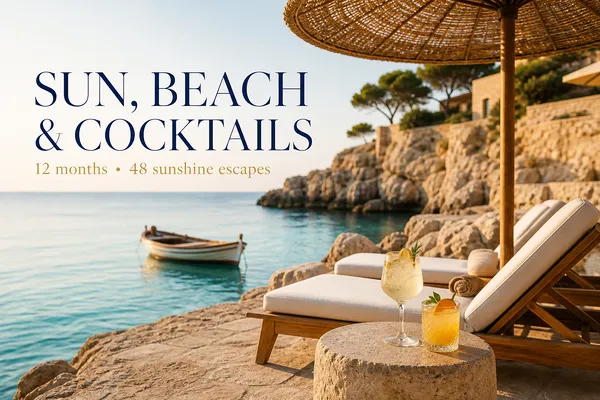
Where to Go for Sun, Beach & Cocktails: 48 Sunshine Escapes
12 months • 48 sunshine escapes
Sometimes the holiday brief really is this simple: warm sun, a beautiful beach and somewhere inviting to sit with a cold drink as the light changes.
Simple does not mean interchangeable. A quiet Caribbean bay in January feels very different from a Greek island beach club in June. Tenerife is an easy winter escape; St Lucia feels like a bigger occasion. Menorca offers pine-fringed coves and slow evenings, while Ibiza can give you elegant restaurants and music long after sunset. The Maldives is designed around the water itself. Puglia, Sicily and Hvar bring food, old towns and local life into the beach holiday.
The month matters, but so does the way you want to spend the day. Some travellers want a resort where everything is ready when they arrive. Others would feel trapped without a hire car, a harbour to explore or a choice of restaurants beyond the hotel. A successful sunshine holiday is not merely about finding the highest temperature. It is about matching the climate, coast and hotel to the experience you actually want.
This guide offers four ideas for every month. Europe and the Mediterranean take priority when they genuinely provide the right conditions. Long-haul destinations appear when they earn their place through better weather, warmer seas or a sense of escape that short haul cannot quite replicate at that time of year.

January: St Lucia, Barbados, Tenerife or Sal
January is when a sunshine holiday can feel most restorative. Christmas is over, winter still has a long way to run and even a week of blue sky can create a genuine reset.
St Lucia offers the most dramatic landscape of the month. The Pitons rise above the Caribbean, rainforest drops towards small coves and many hotels are designed to make the view part of every day. January falls within the island’s drier season. For a special couples escape, the official site for Jade Mountain shows why the island is so closely associated with open-air rooms, privacy and extraordinary views.
Barbados feels easier and more sociable. The west coast is known for calmer water and polished hotels, the south has more nightlife and restaurants, and the east feels wilder. Leave the resort at least once for a fish fry, rum distillery or drive through the quieter interior.
Tenerife is the straightforward short-haul choice. The south offers the best concentration of winter-sun resorts, while Teide National Park, whale-watching and the greener north prevent the week from becoming repetitive. Sal, Cape Verde is drier and more elemental: broad beaches, wind sports and resort life without a long transatlantic journey.

February: Lanzarote, Dubai, Antigua or Gran Canaria
February offers dependable resort weather beyond Europe and a couple of reassuringly easy Canary Island options.
Lanzarote has a distinctive visual character: black volcanic earth, pale low-rise buildings and César Manrique’s architecture set against the Atlantic. It suits travellers who want a resort base but do not intend to stay beside the same pool all week.
Dubai combines beach weather with almost limitless hotel facilities. It works well for couples, families and groups because everyone can shape a different day. For an established beachfront option with landscaped grounds and easy access to the city, explore the official site for One&Only Royal Mirage. February temperatures are generally far more comfortable for outdoor dining and desert excursions than the height of summer.
Antigua gives you classic Caribbean beaches and a gentler pace. The island is often described through its many coves, but the hotel choice determines whether the stay feels sociable, secluded or activity-led. Curtain Bluff is one official resort example for travellers who want two beaches, water sports and an established all-inclusive style.
Gran Canaria is the flexible choice. Stay near the dunes of Maspalomas for resort ease, choose Meloneras for polished hotels or spend time in Las Palmas for city energy and Las Canteras beach.
March: Madeira, Hurghada, Fuerteventura or Sharm El Sheikh
March is less straightforward than January or February. The Mediterranean is still waking up, so the best sunshine choices sit in the Atlantic or beside the Red Sea.
Madeira is not a conventional beach destination. It is the choice for travellers who want subtropical gardens, ocean views, excellent hotels and active days followed by a drink on the terrace. Natural swimming pools and hotel platforms replace long sandy beaches in many areas.
Hurghada offers easy access to the Red Sea, with warm resort days, snorkelling and a broad range of all-inclusive hotels. Look closely at the individual bay, reef access and distance from the airport; two hotels carrying the same star rating can provide very different beach experiences.
Fuerteventura is all about open space. Its beaches feel broad and windswept, making it excellent for surfing, kitesurfing and travellers who enjoy a quieter landscape. Sharm El Sheikh is more contained and resort-focused. The clear Red Sea and coral reefs are the main attraction, so choose a property with the kind of water access you prefer—sandy entry, jetty access or a particularly strong house reef.
April: Paphos, Crete, Malta or the Algarve
April brings the first persuasive Mediterranean options, particularly for travellers who enjoy exploring as much as sunbathing.
Paphos combines resort hotels with archaeological sites, harbour evenings and access to the quieter west of Cyprus. The sea can still feel fresh, but the landscape is green and daytime temperatures are usually well suited to sightseeing. For a more secluded coastal stay outside the town itself, Anassa is an official hotel option worth exploring.
Crete provides the greatest variety. Chania and Rethymno bring Venetian character; eastern Crete has a strong collection of beach resorts; the south feels slower and more independent. April works best for travellers who will enjoy local food, villages and historical sites even if every day is not a pool day.
Malta is culture first and beach second at this time of year. Valletta, Mdina and Gozo provide plenty to explore, while waterfront hotels still give you the pleasure of waking beside the sea. The Algarve offers Atlantic light, clifftop walking and sunny lunches, although the ocean remains bracing. Both suit a spring break where warmth matters more than tropical heat.
May: Hvar, Mallorca, Rhodes or Puglia
May is one of the most rewarding months for a Mediterranean holiday. Resorts are open, landscapes retain spring colour and the busiest summer weeks are still ahead.
Hvar combines clear water, old stone and increasingly lively evenings. Hvar Town is the obvious base for restaurants and boat trips, while Stari Grad and smaller villages offer more stillness. For a calm, design-led stay near Stari Grad, Maslina Resort provides an official example of Hvar beyond the party stereotype.
Mallorca can be almost any holiday you need. Palma adds food and culture, the Tramuntana mountains bring walking and villages, while the coast ranges from large family resorts to quiet coves and grown-up hotels.
Rhodes offers stronger odds of warm beach weather alongside Lindos, Rhodes Old Town and an easy range of boat trips. Puglia is for travellers who want the beach woven into a broader food-and-road-trip experience. Stay in a masseria, visit whitewashed towns and choose the coast according to the wind and the day.
If Hvar or another Adriatic island catches your attention, our guide to romantic escapes in Croatia explores how several Croatian bases feel in practice.
June: Mykonos, Corfu, Sardinia or the Amalfi Coast
June gives you full Mediterranean summer without quite the pressure of July and August.
Mykonos is the glamorous choice: polished hotels, beautiful beaches and a restaurant scene that continues late into the evening. It can be party-focused, but it does not have to be. Stay away from the busiest lanes, reserve the beach clubs you actually care about and leave some days unstructured.
Corfu is greener and more traditional. Corfu Town adds Venetian architecture and lively evenings, while the north-east coast is known for small bays, villas and boats. It is particularly useful when one traveller wants culture and another mainly wants the beach.
Sardinia has some of Europe’s clearest water, but it is not one single resort coast. The north-east is polished and expensive, the south is easier-going, and the west feels more rugged. The Amalfi Coast is less about long beaches and more about scenery, boats, terraces and the pleasure of moving between coastal towns. Choose it when atmosphere matters more than a broad stretch of sand.
July: Ibiza, Paros, Menorca or Bodrum
July is lively everywhere on this list. The key is choosing a property and location that let you step into the energy when you want it and retreat when you do not.
Ibiza is far more varied than its nightlife reputation suggests. The island has quiet northern coves, excellent rural hotels, beach restaurants and some of the Mediterranean’s most memorable sunsets. Couples can build a sophisticated week without entering a nightclub.
Paros offers whitewashed villages, clear water and sociable evenings in Naoussa. It is fashionable, so July is not the moment for spontaneity with accommodation or ferries. Menorca remains calmer, with pine-fringed calas and the Camí de Cavalls coastal path giving the island an outdoorsy rhythm.
Bodrum blends Aegean beach days with restaurants, marinas and a broader choice of resorts. The peninsula has distinct areas, from lively town-centre stays to secluded bays, so “Bodrum” should be treated as the beginning of the hotel search rather than the final decision.

August: Naxos, Korčula, Skiathos or Palma
August brings warm seas, long days and peak demand. Book the hotel and transport you genuinely want rather than hoping to improvise around the busiest dates.
Naxos combines broad beaches with mountain villages and a more grounded atmosphere than some neighbouring Cycladic islands. It is large enough to reward a full week. Korčula adds vineyards, a walled old town and clear Adriatic coves. Stay near Korčula Town for evening atmosphere or choose a quieter coastal base for swimming and space.
Skiathos is green, compact and beach-rich, with boat trips making it easy to find a different bay each day. Palma is the urban alternative: a handsome city, excellent food and quick access to Mallorca’s beaches. It suits travellers who want evening choice and air-conditioned culture alongside the coast.
For a broader view of Croatia, Greece and other seasonal ideas, link this guide with our first article, Where to Go, When.
September: Santorini, Sicily, Puglia or Hvar
September is arguably the finest month for adults who want a sophisticated Mediterranean beach holiday. The water is warm, restaurants remain open and the atmosphere begins to soften.
Santorini is not primarily a beach island, but the combination of caldera views, hotels with private terraces and winery afternoons earns it a place. Choose a quieter village if crowds would undermine the experience.
Sicily can combine Etna, baroque towns, food and the sea. Pick one region rather than attempting the whole island. Puglia offers warm coastlines, masserie and towns such as Ostuni, Lecce and Monopoli. Both are strongest when beach time forms part of a wider cultural and culinary journey.
Hvar remains lively but easier than in August. Sea temperatures are inviting, boat days continue and evenings beneath the fortress feel relaxed. Maslina Resort remains one possible official hotel reference for a quieter Hvar stay, while Hvar Town suits travellers who want more movement around them.
October: Crete, Cyprus, Antalya or Madeira
October requires careful matching because conditions and seasonal opening patterns begin to change as the month progresses.
Crete offers the most depth, with beaches, Venetian towns, archaeological sites and mountain villages. Chania and the eastern resort areas usually retain the broadest choice. Cyprus is particularly dependable for warm sea, with Paphos, Limassol and the eastern beaches creating different styles of stay.
Antalya is the easiest family-resort answer. Large properties offer pools, spas, sports, waterparks and extensive dining, while ancient sites and waterfalls provide days beyond the hotel. Madeira is for travellers who want subtropical landscapes and sea views rather than a traditional sandy-beach week. Choose a hotel with an excellent pool and use clear days for walking or touring.
November: Tenerife, Dubai, Mauritius or Sal
November is an excellent time to leave the grey behind before the Christmas rush begins.
Tenerife provides simple short-haul logistics, an enormous range of hotels and enough variety for both active and restful weeks. Dubai offers more reliable heat, with beach mornings, desert evenings and restaurants that suit almost every mood.
Mauritius is the bigger journey. Refined resorts sit alongside waterfalls, markets, hiking, gardens and a food culture shaped by several traditions. The island has microclimates, so choose the coast for the precise dates rather than assuming every beach will feel identical. The official One&Only Le Saint Géran site offers one example of a full-service Mauritian resort on a private peninsula.
Sal, Cape Verde is the fly-and-flop alternative: dry landscapes, broad beaches and a relatively manageable journey. It suits travellers who would rather read, swim and rest than build a long sightseeing list.
December: Barbados, St Lucia, Maldives or Gran Canaria
December sunshine can mean escaping Christmas altogether or turning it into the most memorable trip of the year. Festive dates carry premium prices, minimum stays and special meal arrangements, so examine the full package rather than the room rate alone.
Barbados is sociable and easy to enjoy, with calm west-coast water, lively south-coast evenings and enough island life beyond the hotels. St Lucia is more dramatic and romantic, with the Pitons and rainforest giving the holiday a stronger sense of occasion.
The Maldives is the ultimate water-led escape. Resort choice determines everything: transfer, dining, reef, atmosphere and the balance between privacy and activity. For a nature-led luxury example in the Baa Atoll, visit the official Soneva Fushi site.
Gran Canaria is the practical December answer. It cannot promise Caribbean heat, but it offers milder days, excellent hotels and an easy route from the UK. Choose the south for the strongest winter-sun conditions or combine the resort with time in Las Palmas.
How to choose the right sunshine holiday
Decide whether the beach or the hotel matters more
Some travellers need powder-soft sand and easy swimming. Others care more about a beautiful pool, attentive service and somewhere lovely for dinner. A dramatic rocky coastline can be perfect if you spend most of the day on a hotel terrace; it can disappoint if you imagined walking barefoot for miles.
Look beyond the temperature
A forecast of 24°C does not describe wind, humidity, sea temperature or the likelihood of cool evenings. The Canaries, Cape Verde and Madeira can all be appealing in winter, but they do not feel the same as the Caribbean. Honest expectations protect the holiday from a misleading number on a weather app.
Match the board basis to the destination
All-inclusive can be excellent in a secluded Red Sea resort or on a Maldivian island where every meal is otherwise an additional expense. In Palma, Puglia or Hvar, locking every dinner into the hotel may remove one of the main reasons to travel. Decide whether the property is the destination or the base.
Choose the room you will actually use
A private pool sounds luxurious, but it may not justify the cost if you spend every day at the beach. A sea-view balcony, shaded terrace or room close to family facilities might change the experience more. Spend on the detail that improves your real routine, not the feature that looks best in a brochure.
Turning sunshine inspiration into the right booking
The easiest mistake is choosing a beautiful destination and assuming every hotel within it will deliver the same holiday. In reality, the coast, room category, transfer, board basis and atmosphere can matter as much as the island name.
At Aveline Travel, we begin with the way you want the week to feel. Quiet or sociable? Adults-only or family-friendly? A beach you can walk along, a house reef, a swim-up room, a good local restaurant scene or enough on-site facilities that nobody needs to plan anything after breakfast?
We then narrow the options and explain the trade-offs clearly. Our article on discovering travel deals with an expert agent explores why the value of advice is often found in the fit, inclusions and details rather than the cheapest visible price.
If you are travelling as a couple, you may also want to explore Where to Go as a Couple, where the recommendations focus on atmosphere and shared experiences rather than sunshine alone.
If you know the month but are still choosing between the Canaries, Caribbean, Mediterranean or Indian Ocean, you are welcome to contact Aveline Travel for a calm, personalised conversation.
No generic shortlist and no pressure to choose the farthest option. Just the right stretch of coast, the right hotel and a cold drink waiting where you will genuinely enjoy it.
