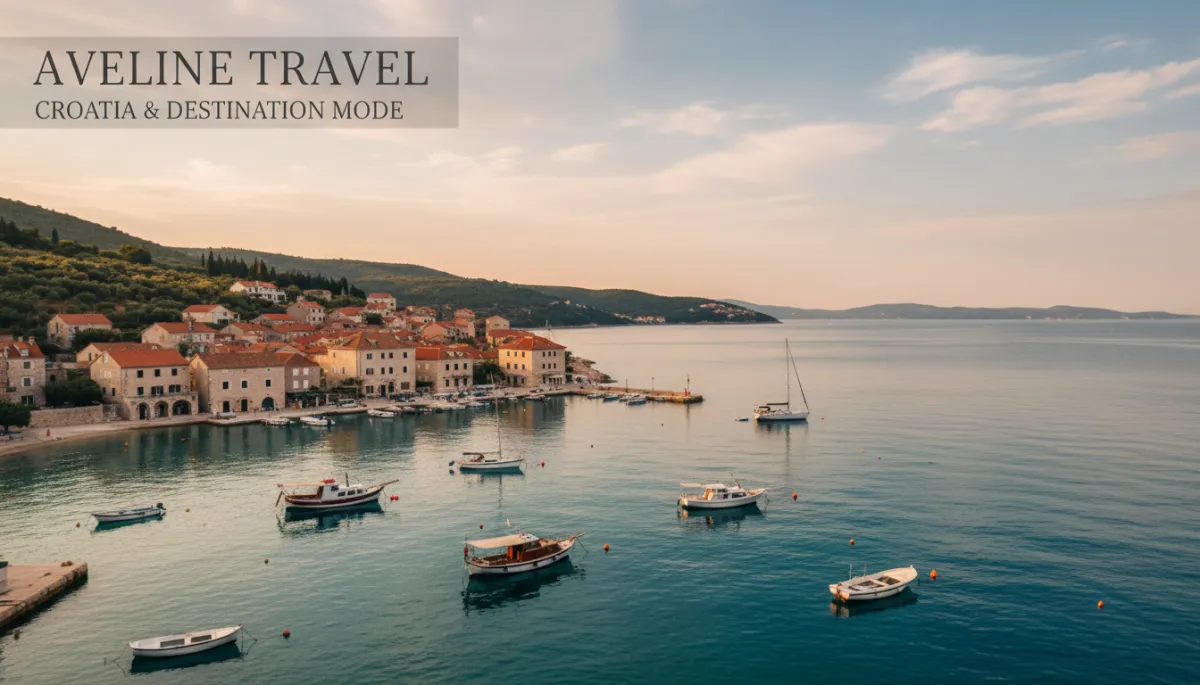
Experience Croatia: Slow Travel Itinerary Guide
Croatia, Slow Travel, Itinerary Planning
How to Experience Croatia Without Rushing
Croatia usually starts long before you land in Split or Dubrovnik. It begins at a kitchen table somewhere, with too many tabs open, comparing ferries, hotels and “must‑see” lists until the trip feels heavier than it should. By the fourth Croatia itinerary draft, the idea of a simple, relaxed Croatia travel experience can feel strangely far away.
Slow travel principles for Croatia that actually feel doable
Slow travel in Croatia does not need to be a grand philosophy. It can be as simple as deciding you would rather remember the sound of the sea from one balcony than the check‑in desk of five different hotels. It is choosing fewer movements, softer mornings and a Croatia itinerary that has more white space than obligation.
💡 Pro Tip: If your draft itinerary looks busy on paper, it will feel even busier in real life.
In practice, slow travel Croatia comes down to a few gentle shifts:
staying longer in each place, even if that means visiting fewer places overall
planning travel days as real days, not blank spaces between “proper” sightseeing
noticing when your energy drops, and allowing the itinerary to bend around that instead of pushing through it
Croatia rewards this kind of gentler rhythm. Coastal towns feel completely different at 8 in the morning when the bakery queue is mostly locals and the harbour is quiet, compared with 3 in the afternoon when the sun bounces off stone and the streets feel heavy with heat. Slow travel is really just giving yourself the time to experience both, without rushing between them with a suitcase in hand.
Fewer destinations, better experiences
Many Croatia itineraries start the same way: Istria, Plitvice, Zadar, Split, Hvar, Korčula, Dubrovnik, maybe even Montenegro. On paper it looks exciting. In reality, it can mean a string of early alarms, bus stations, ferry queues and a constant low‑level feeling of being slightly behind schedule. The coastline becomes a blur of similar harbour photos rather than distinct memories of how each place felt at different times of day.
“If every day involves packing a bag, the trip stops feeling like a holiday and starts feeling like admin.”
Croatia usually works better once you stop trying to see all of it. Choosing three or four places for a two‑week trip often creates a calmer, richer experience than trying to fit in six or seven. You start to notice the personality of each town: the particular way the light hits the stone in Šibenik in late afternoon, or how Korčula’s old town feels almost like a small stage set once the day‑trippers leave and the cicadas take over the soundtrack.
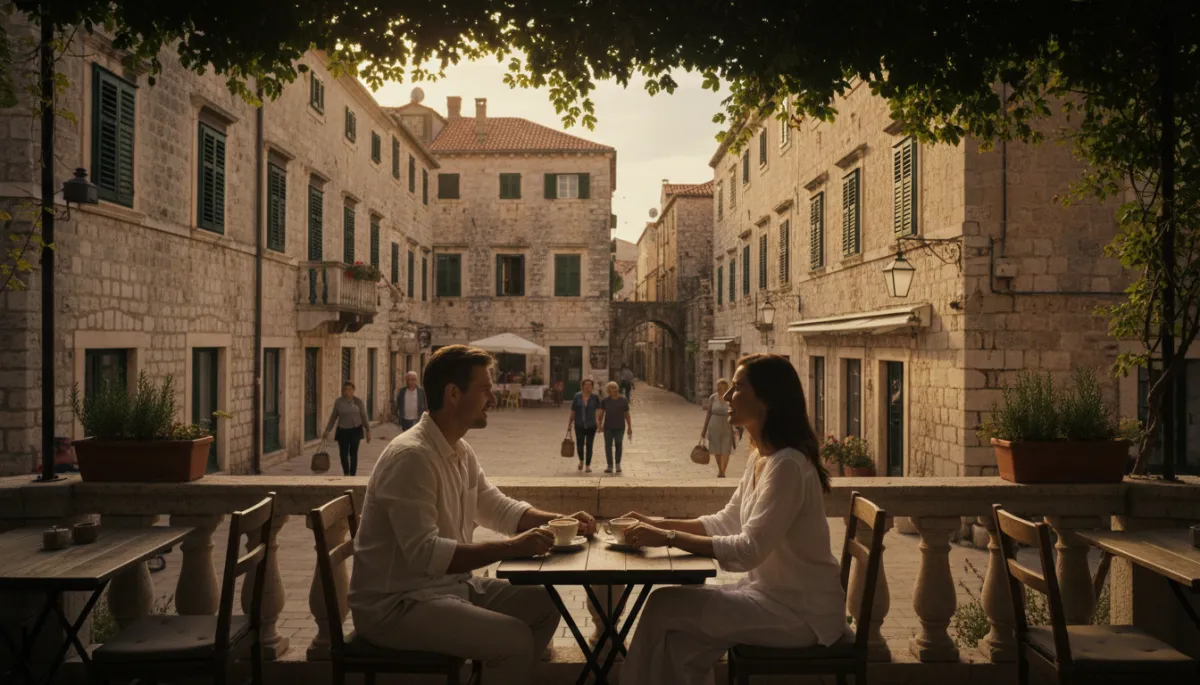
Staying put for several days lets ordinary café moments become the highlight.
With fewer destinations, small things become easier. You do not have to think about luggage every second day. You can return to the same konoba because you liked how it felt, not because it was top‑rated. You have time to walk the long way back from the beach, stopping to sit on a bench facing the water just because it looks inviting, instead of calculating how long it will take to pack before tomorrow’s ferry.
Choosing the right mix of places
Not every destination needs to be dramatic. In fact, a relaxed Croatia travel plan often feels better when you pair one or two well‑known highlights with quieter stops that give you space to recover. Split and Dubrovnik are wonderful, but they are also busy, especially in high season. Balancing them with somewhere softer like Vis, Mljet, or a small village on Brač can make the whole itinerary feel more breathable.
📌 Key Takeaway: For every high‑energy stop, add at least one low‑key base where you can slow down.
Some islands are beautiful for a day. Others are easier to settle into. Hvar town, for example, can feel intense in July evenings, full of people and noise. It is lively and fun if you have the energy for it. Vis, by contrast, often feels like an exhale. The harbour is smaller, the nights are quieter, and you can walk home along the water without weaving through crowds. Knowing which kind of place you need at each point in your trip is a quiet form of slow travel.
The calm that comes with longer stays
There is a particular relief that comes from unpacking properly. Hanging a few clothes, putting your book on the bedside table, knowing you will wake up in the same room for the next four or five mornings. In Croatia, longer stays allow you to fall into the natural rhythm of a place instead of skimming across the surface of many.
With three or four nights in one spot, you can let the first day be messy. You can arrive already tired, wander a little, get your bearings and not feel that you are “wasting” time. The second day can be for the obvious things: the old town walk, the main beach, the viewpoint everyone mentions. By the third day, you start to find your own patterns. A particular café where the staff recognise you, a quieter swimming spot slightly further along the coast path, a bakery that still has fresh burek after 10 in the morning.
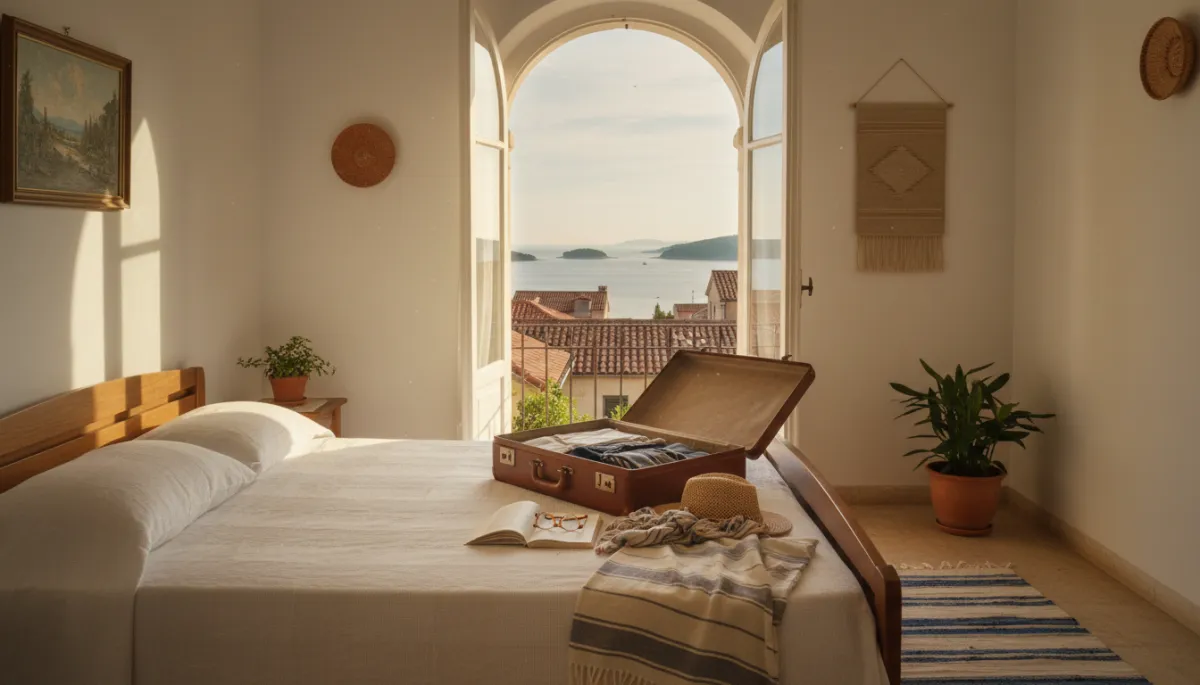
Unpacking for several nights gives your mind the same chance to settle.
Longer stays also soften the pressure around weather and crowds. If one afternoon is windy or a cruise ship is in port, you can simply shift your plans to the next day. You are no longer trying to compress an entire experience into a single 24‑hour window. That space often leads to better memories: the evening you chose a side street restaurant because the main promenade felt too bright, or the quiet morning swim when the bay was almost empty except for a few older locals who clearly do this every day.
Staying inside or outside the historic centres
Where you base yourself within a town changes the whole feel of your stay. Inside the old towns, the stone streets are beautiful, but in peak season they can feel heavy by mid‑afternoon. Heat settles between the walls, sound carries, and rolling a suitcase over cobbles after a long travel day is nobody’s favourite memory. Staying just outside the historic centre, within a 10 to 15 minute walk, often creates more balance: you can step into the atmosphere when you want it and retreat to somewhere quieter when you do not.
💡 Pro Tip: If you hate dragging bags over cobblestones, book just outside the walls and save your energy for exploring.
For a slow travel Croatia itinerary, this small decision can be as important as the destinations themselves. A simple apartment with a balcony, a bit of shade and a view of laundry lines and rooftops can feel surprisingly luxurious when you return from a hot afternoon in town. It is the kind of comfort that supports longer stays without turning the trip into something overly polished or distant from everyday life around you.
Ferry pacing and the quiet rhythm of the Adriatic
Ferries quietly shape almost every relaxed Croatia travel plan along the coast. They look simple on the map, but the schedules have their own rhythm. There might be one morning catamaran that sells out quickly, an afternoon car ferry that takes longer but feels calmer, or a connection that only runs on certain days of the week. Building your itinerary around these patterns, instead of forcing them to fit a tight sequence of stops, can make the whole trip feel more grounded.
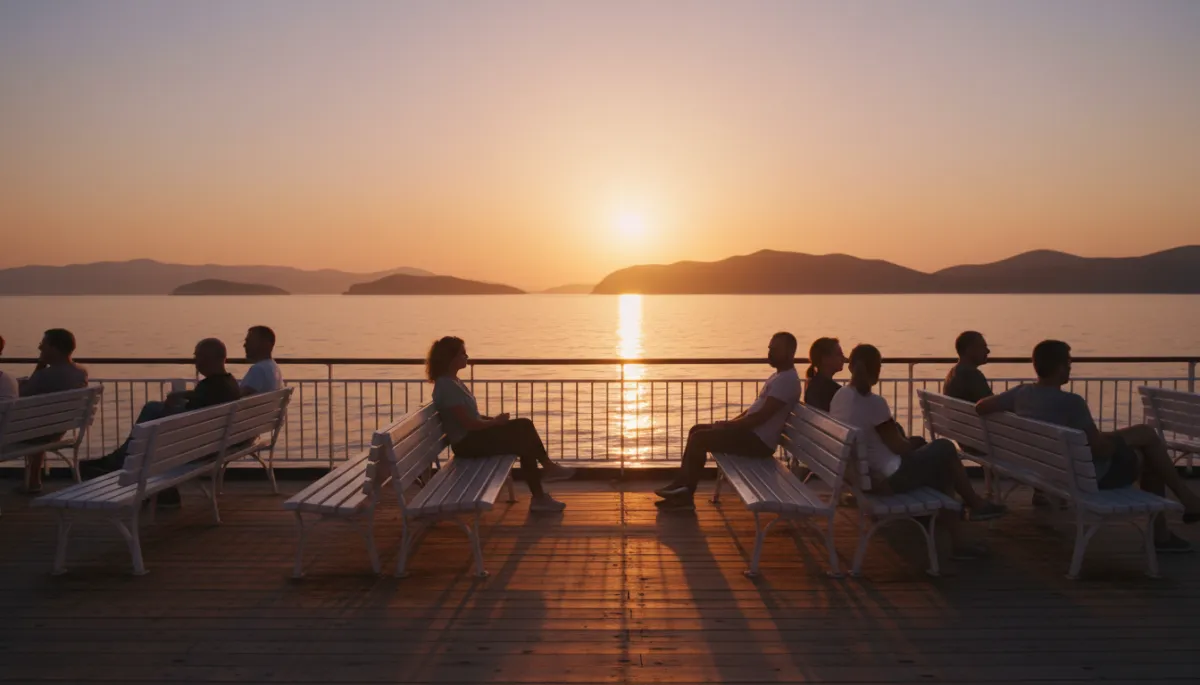
Treating ferry crossings as part of the holiday turns travel days into sea days.
Treating travel days as real days
The most common point of tension comes from trying to squeeze too much into a ferry day. Arriving in Split in the late morning, catching an afternoon ferry to an island, and still hoping for a swim and a sunset drink in your new destination is technically possible, but often feels rushed. By the time you have navigated the harbour, found the right pier, queued, boarded, disembarked and reached your accommodation, the day has already been full, even if you have not “done” anything obvious.
⚠️ Warning: If your plan expects you to be “fresh” after a long ferry and check‑in, you are probably overestimating your energy.
Slow travel Croatia means acknowledging that travel days carry their own weight. Planning an easy dinner near your apartment that night, or just a simple walk along the waterfront, respects the reality of how you will probably feel. It also makes room for that small but memorable moment: standing on the deck as the ferry leaves the mainland, watching the coastline slide away, feeling the shift from planning mode into holiday mode without needing to talk about it.
One island or two, rather than many
It can be tempting to string together a chain of islands simply because the ferry routes allow it. Hvar, then Korčula, then Mljet, maybe even Lastovo. On a map it looks like an elegant line across the sea. In reality, every move involves packing, check‑out, getting to the port, waiting, sailing, arriving, finding your new place and settling in. The islands start to blur into one long process of arrival and departure, with less time to actually feel what is different about each one.
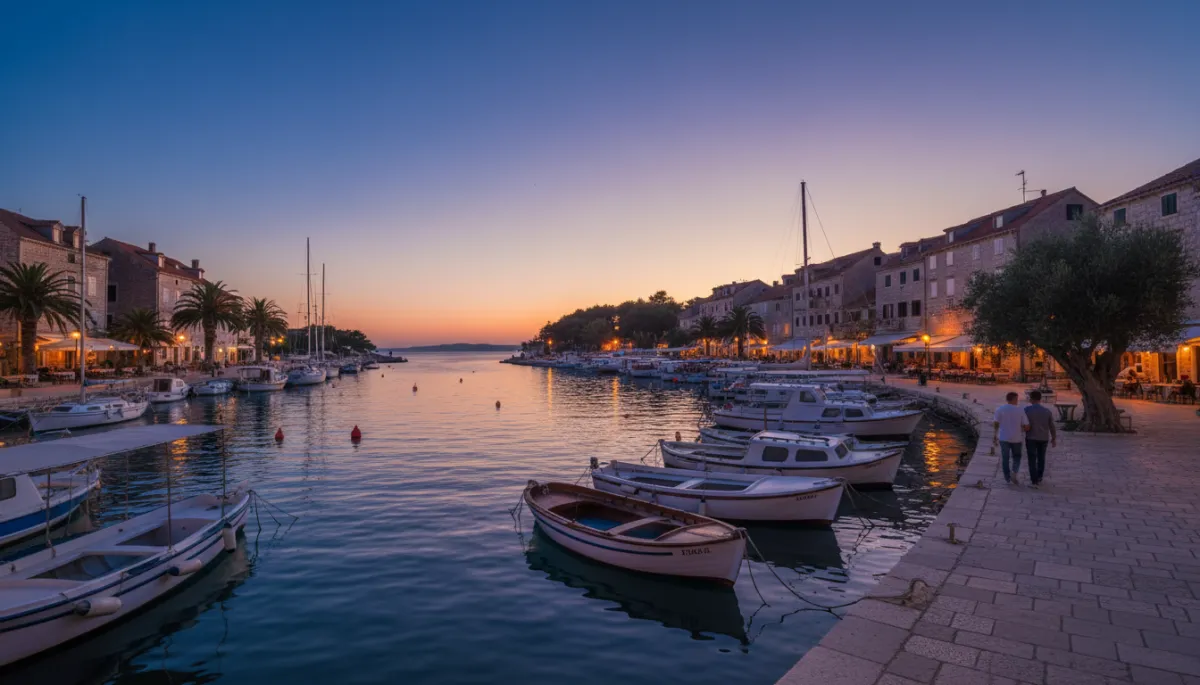
Evenings feel different when you are not repacking for another ferry tomorrow.
Choosing one main island base, with perhaps a single second island if you have enough time, often works better. From Hvar or Korčula, for example, you can take short boat trips to nearby bays and smaller islands without changing accommodation. You still feel the variety of the Adriatic, but your suitcase stays closed. The sea becomes a backdrop to your days rather than a timetable you are constantly trying to keep up with.
Letting your Croatia itinerary breathe
A relaxed Croatia travel plan is often less about what you include and more about what you gently set aside. You might decide not to see Plitvice on this trip, so that you can spend an extra night by the sea. You might choose to skip a popular day trip because the thought of another early start makes your shoulders tense. These small decisions create room for the moments people remember later: a quiet dinner after a crowded ferry day, a slow walk home along the harbour after the last tour groups have gone, an unplanned swim because the water looked too inviting to ignore.
You will not see everything. That is normal. Most people do not, and they still have a good time.
There is usually a moment, somewhere after dinner near the water, where people realise how much they needed the break. It rarely happens on a transfer day or during a rushed sightseeing circuit. It tends to arrive on the second or third evening in the same place, when you already know where you will buy bread in the morning and which side of the harbour catches the last light. Slow travel Croatia is simply giving yourself enough time and space for that feeling to appear.
A calm way to think about your trip
When you look at your Croatia itinerary, try reading it not as a list of places, but as a sequence of energies. Where do you arrive already tired from work and travel? Where do you need the softest landing? Which part of the trip can hold the busier towns, and where will you need quieter days by the sea to recover? If you pay attention to that, the practical choices start to arrange themselves more gently: fewer destinations, longer stays, ferries that make sense for your body as well as your schedule.
📌 Key Takeaway: Plan for how you actually travel on a tired day, not how you wish you did on your most energetic one.
Croatia does not ask you to do everything. The country will still be there if you decide to come back. Allowing this trip to be slower, simpler and more spacious is not missing out. It is often the reason you come home with clearer memories: the taste of grilled fish in a small harbour, the shade of a pine tree above a quiet cove, the sound of church bells drifting over rooftops as you walk back to the same apartment you have been calling home all week.
If your plans feel complicated, it is usually a sign to take one thing out rather than add another solution in. Croatia has a way of rewarding people who give it time. Let the itinerary breathe a little, and the holiday tends to follow.
Frequently Asked Questions about Slow Travel in Croatia
These questions come up often when people start turning a rushed Croatia itinerary into a calmer one. Use them as gentle prompts rather than strict rules.
How many destinations should I plan for a two‑week trip?
For a genuinely relaxed pace, three to four bases is usually enough for two weeks. That might look like one mainland town, one island, and one final stop near your departure airport. You can still add day trips from each base without constantly packing and unpacking.
💡 Pro Tip: If you are counting more travel days than beach or café days, you probably have too many stops.
Is slow travel in Croatia possible in July and August?
Yes, but it matters where you stay and how you structure your days. In peak season, consider:
choosing smaller towns or islands as your bases and visiting busier spots like Dubrovnik or Hvar town as day trips
planning early mornings and later evenings for exploring, with slow, shaded afternoons for rest
booking ferries and key stays well in advance so logistics feel settled, not stressful
Do I need to book all ferries in advance for a slow itinerary?
For popular summer routes, it is wise to book catamarans in advance, especially on weekends and around national holidays. Car ferries are often more flexible, but you should still arrive at the port early. A slow travel mindset means accepting that some sailings will be busier and building in margin so a full boat does not derail your whole plan.
Is it better to rent a car or rely on ferries and buses?
It depends on the kind of slowness you want. A car gives you freedom for spontaneous stops in Istria, on the Dalmatian coast, or on larger islands like Brač. But it can also add mental load: parking, navigating, and returning the vehicle. If you prefer to fully switch off, combining ferries, local buses and the occasional taxi often feels calmer, especially when you are mostly staying in walkable towns.
How long should I stay on one island to feel settled?
Aim for a minimum of three nights on any island you visit, and four or five if you can. The first day is for arrival and orientation, the second for the “obvious” sights, and the third and beyond for the quieter routines that make slow travel feel different: returning to the same swimming spot, recognising faces on the harbour, knowing which bakery still has your favourite pastry after 9 a.m.
What if I am worried about “missing out” by travelling slowly?
It is normal to feel a little pull toward squeezing in one more island or national park. When that happens, return to the question: What do I actually want to remember from this trip? Most people recall how a place felt more than how many places they ticked off. Croatia will still be here if you come back. Letting this visit be slower is not a compromise; it is often what makes it restorative.
📌 Key Takeaway: Trade a little “coverage” for a lot more calm, and your memories usually deepen, not shrink.
