
Stress-Free Croatia Island Hopping Guide
Croatia, Island Hopping, Ferry Guide
Croatia Island Hopping Without the Stress
Most couples do not struggle to get to Croatia. They struggle with what to leave out once they arrive. Between Split and Dubrovnik, every glossy guide seems to suggest you can see everything, on every island, in a single week. You probably cannot. And you do not need to.
The quiet problem with Croatia island hopping
On paper, Croatia island hopping looks simple. A line of islands, a web of ferries, a week off work, and a handful of saved Croatia travel itineraries. In reality, the overwhelm creeps in quickly. Tabs multiply. Routes clash. You catch yourself trying to optimise rather than imagine how you actually want to feel when you wake up.
The good news is that Croatia rewards restraint. The ferries are frequent on the main routes, the distances are short, and you do not need a complicated Croatia ferry guide to have a calm, memorable trip. You just need fewer moves, clearer choices, and a slower pacing than the internet usually suggests.
Best routes that actually feel manageable
The most reliable way to remove stress is to think in hubs, not in dozens of tiny crossings. In Croatia, that usually means starting in Split or Dubrovnik, then choosing a simple chain of 2 or 3 islands with clear, high-frequency connections. Quality over quantity, even on the water.
Route Feel Nights per stop Split → Hvar → Korčula → Dubrovnik Balanced, classic Dalmatian arc 3 + 3 + 3–4 Split → Brač → Hvar → Split Shorter loop, easy ferries 3 + 4 + 2–3 Split → Vis → Hvar → Split Quieter, more contemplative 4 + 4
The Split to Hvar to Korčula to Dubrovnik line works particularly well. It follows the natural flow of the main catamarans, including high-speed services from Jadrolinija and private operators such as Krilo and TP-Line, and mirrors the 10 day pattern many route planners now recommend. You move steadily south, rather than zigzagging back and forth, which quietly removes a lot of decision fatigue.
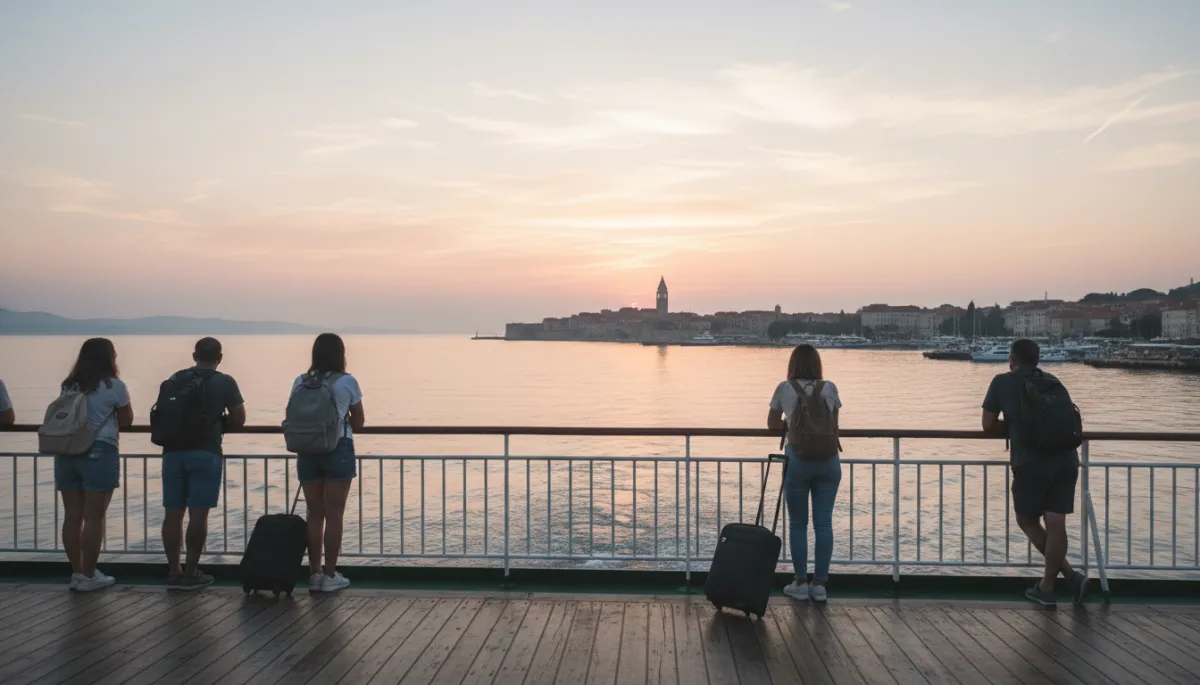
View from a ferry deck leaving Split at sunrise, soft sky, passengers with light luggage leaning...
Early departures out of Split often feel like a gentle reset before the next island.
Ferry simplicity: treat it like a timetable, not a puzzle
Croatia’s ferries look complex from a distance, but the reality on the ground is calmer. Jadrolinija provides the backbone of car ferries and catamarans, with private lines filling in the high-speed links. In high season, routes from Split to Brač, Hvar, Korčula and beyond run multiple times per day, and Dubrovnik links cleanly to Mljet and Korčula on regular catamarans.
As a traveller who likes clear systems, I find it helpful to think in simple rules rather than exceptions. For most couples travelling as foot passengers, the rule is: use high-frequency routes, book catamarans a few weeks ahead, and avoid tight same day connections. Vehicles need more lead time, especially in July and August, but if you are travelling light, you can usually buy tickets at the port 30 to 60 minutes before departure outside peak weekends.
💡 Quiet rule of thumb: if a crossing is essential to your Croatia island hopping plan, book it. If it is a nice extra, leave it flexible.
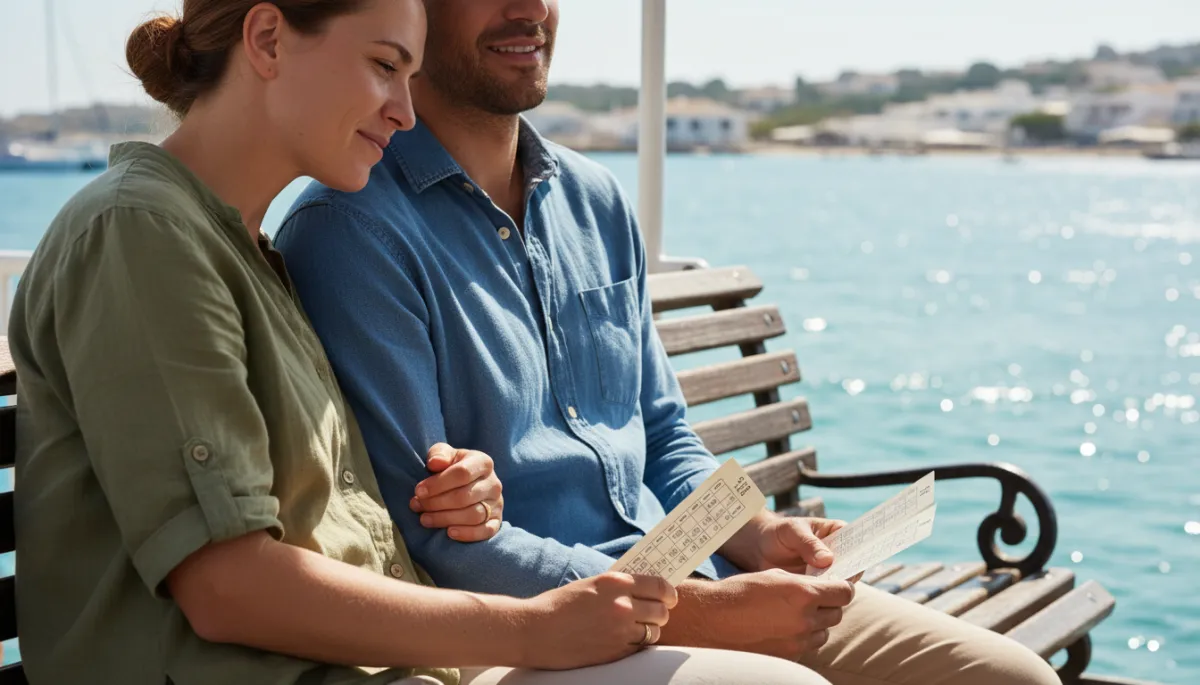
Quiet moment on a shaded ferry bench, tickets and a simple timetable resting between them.
One printed timetable and a single confirmed crossing often calm the noise of ten open tabs.
Luggage handling tips for calmer crossings
Most stress on travel days is not about the sea. It is about what you are carrying. Croatian ferries are straightforward for foot passengers, but the combination of stone steps, midday heat and narrow old town lanes can make even a well packed suitcase feel heavier than it looks on your hallway floor at home.
Choose one medium suitcase each plus a soft day bag. The smaller the number of pieces, the easier boarding and disembarking feel, especially when the ferry only stops for a few minutes at intermediate islands.
Pack a simple “ferry pocket” in your day bag: tickets, passports, a light jumper, water and something to read. It means you are not opening and closing your main bag on deck.
Assume you may need to roll your suitcase 10 to 15 minutes from port to accommodation on each island. Booking stays within that radius quietly changes the feel of every arrival.
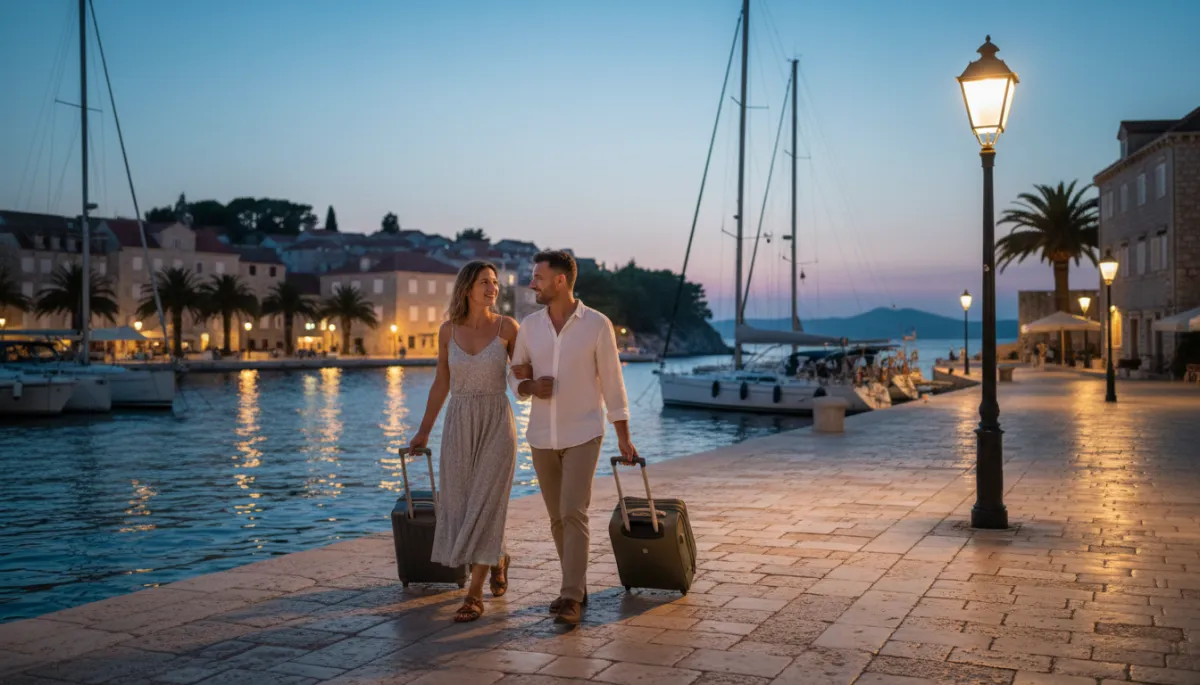
Scene of a couple slowly wheeling two small suitcases along a quiet stone waterfront on Hvar at...
Keeping luggage light turns each arrival into a short walk, not a negotiation.
Island combinations that work in real life
Split, Hvar, Korčula, Dubrovnik: a gentle downward curve
For many couples, the classic route from Split to Hvar to Korčula to Dubrovnik still makes sense. Split connects year round to Brač and Hvar, with seasonal and year round high-speed ferries on to Korčula and Mljet. From there, Dubrovnik is a natural end point, with catamarans linking back through Mljet and Korčula if you need to retrace your steps.
Hvar gives you energy and late dinners if you want them. Korčula slows the pace with medieval streets and vineyards. Dubrovnik brings a final dose of drama before you fly home. It is not an original Croatia island hopping itinerary, but it is one of the few that works as cleanly in practice as it does on a map.
Brač and Hvar: a shorter loop from Split
If you have less time, pairing Brač and Hvar from Split is enough. Ferries to Brač’s Bol and Milna run frequently in season, and the new high-speed Split to Bol to Hvar to Vis line adds extra flexibility in the summer months. You can spend a few days around Zlatni Rat on Brač, then slide across to Hvar for a different rhythm without feeling you are living on the timetable.
Vis and Mljet: when you want more space
For couples who prefer quieter water, Vis and Mljet are worth considering. Vis sits further out, with clear high-speed links from Split. Mljet, with its national park and saltwater lakes, links from both Split and Dubrovnik in season. Neither needs to be rushed, and both benefit from at least three or four nights rather than a frantic overnight stop.
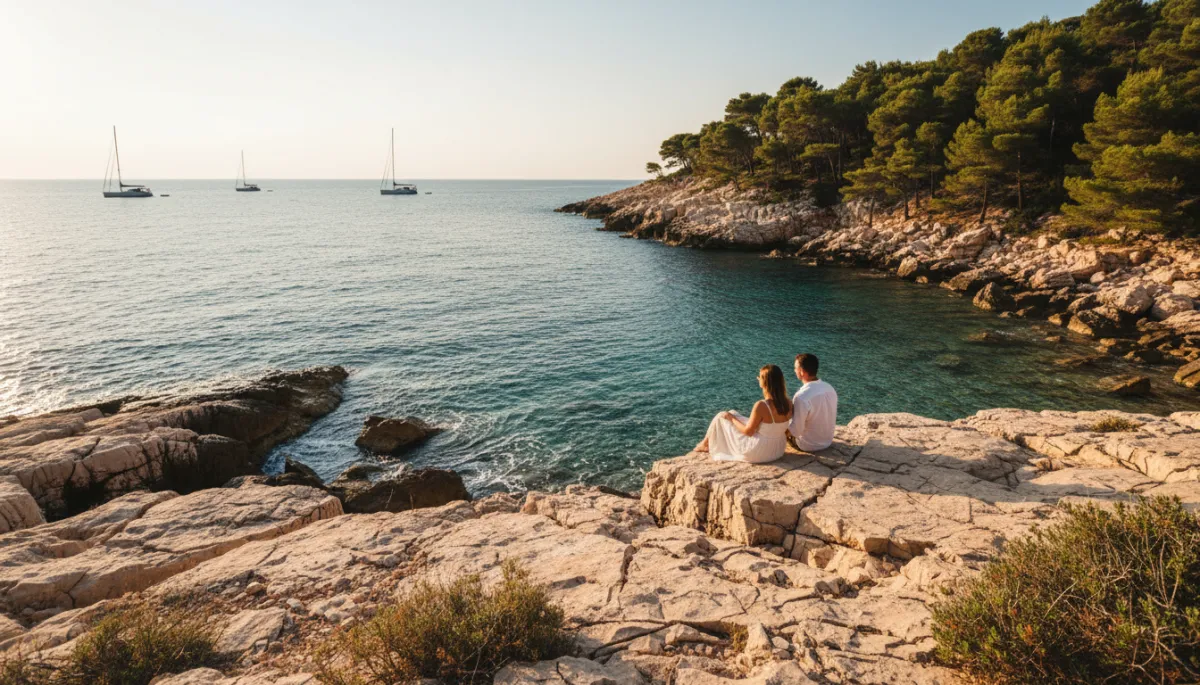
View of a couple sitting on rocks above a quiet cove on Korčula at late afternoon, gentle waves,...
The best island combinations leave space for afternoons that are not planned at all.
Slower pacing: treating days like positions, not trades
In everyday life, doing more often feels like the safest choice. More plans, more stops, more activities. It can seem as if packing the calendar guarantees a better holiday. In practice, the opposite tends to be true. The more you add, the harder it is to really notice any of it.
A simple rule that works well in Croatia is three nights minimum per island, four if you can. That gives you one arrival day, one day to wander without pressure, and one day to do something slightly further out, like a boat trip or a long lunch inland. Anything less, and you start to trade presence for movement.
📌 Key thought: A good Croatia island hopping plan is not the one that fits the most islands into your calendar. It is the one that lets you forget the timetable once you are there.
Leaving space for the sea to do its work
The Adriatic has a way of softening the edges of busy lives, but it needs time. If you choose a clear route, keep your luggage light, and resist the urge to collect islands, Croatia island hopping becomes something very simple: a few short crossings, a handful of ports, and long stretches of sea in between where you have nothing to do but watch the coastline move past.
You do not need to chase every ferry to feel you have done Croatia properly. You just need a route that makes sense for you, and enough quiet days in each place to remember how it felt to be there together.
Croatia Island Hopping FAQ
How many islands should we try to see in one week?
For most couples, two islands plus your arrival or departure city is enough for a week. That usually means Split + Hvar + Korčula, or Split + Brač + Hvar, with three or four nights in each place.
Do we need to book every ferry in advance?
Book the key catamaran crossings that anchor your route, especially in July and August. For shorter, high-frequency links and shoulder season travel, you can often buy tickets at the port on the day.
Is it worth taking a car on the ferries?
If you are focusing on a few well-connected islands and staying near the ports, you rarely need a car. Travelling as foot passengers keeps costs down and makes boarding, disembarking, and old town stays much easier.
What is the best time of year for a calmer trip?
Late May, June, September and early October usually offer the best balance: warm sea, running ferries, and fewer crowds than peak summer.
How long should we stay on each island?
Aim for a minimum of three nights per island. Four nights gives you space for one slow day, one small adventure, and time to simply sit by the sea without watching the clock.
